
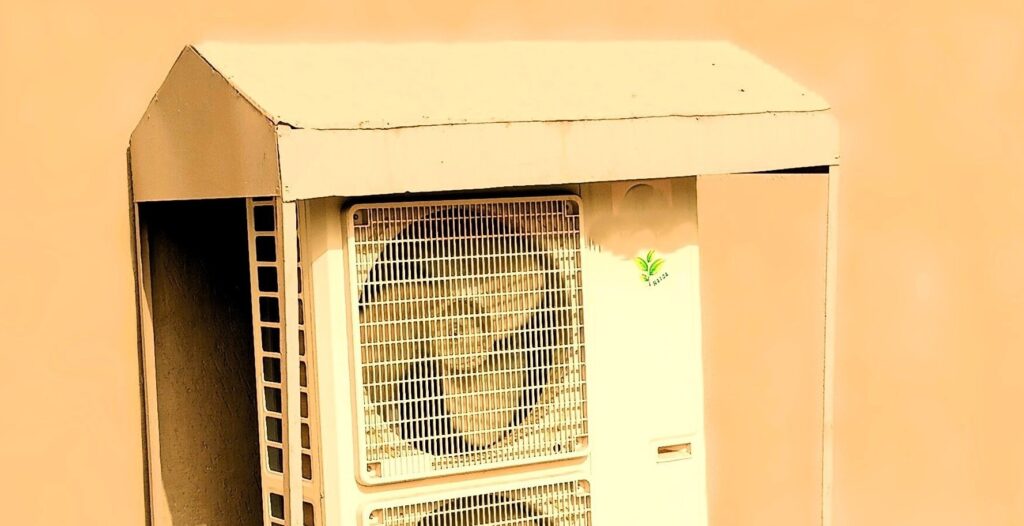

Across the world, from hot cities in the Middle East and South Asia to urban homes in Africa, Southern Europe, and parts of the United States, many people install shades or canopies above outdoor air-conditioner units.
The idea feels natural:
If direct sunlight heats the AC unit, shading it should improve cooling and reduce electricity use.
This old-school logic is partly correct. But the real answer depends on one critical factor: airflow.
Why People Cover Outdoor AC Units
Outdoor air-conditioner units reject heat absorbed from inside buildings.
During extreme summer conditions, these systems often operate under:
- Direct sunlight
- High ambient temperatures
- Heat radiating from walls and rooftops
- Poor ventilation around buildings
As climate change drives hotter summers globally, air conditioners are being pushed harder than ever.
This is why homeowners and technicians commonly install:
- Metal canopies
- Pergolas
- Mesh shades
- Roof extensions
- Decorative enclosures
The goal is simple:
- Reduce solar heat exposure
- Protect equipment
- Improve efficiency
- Extend equipment life
And in some cases, it genuinely works.
How Shade Can Improve Cooling Efficiency
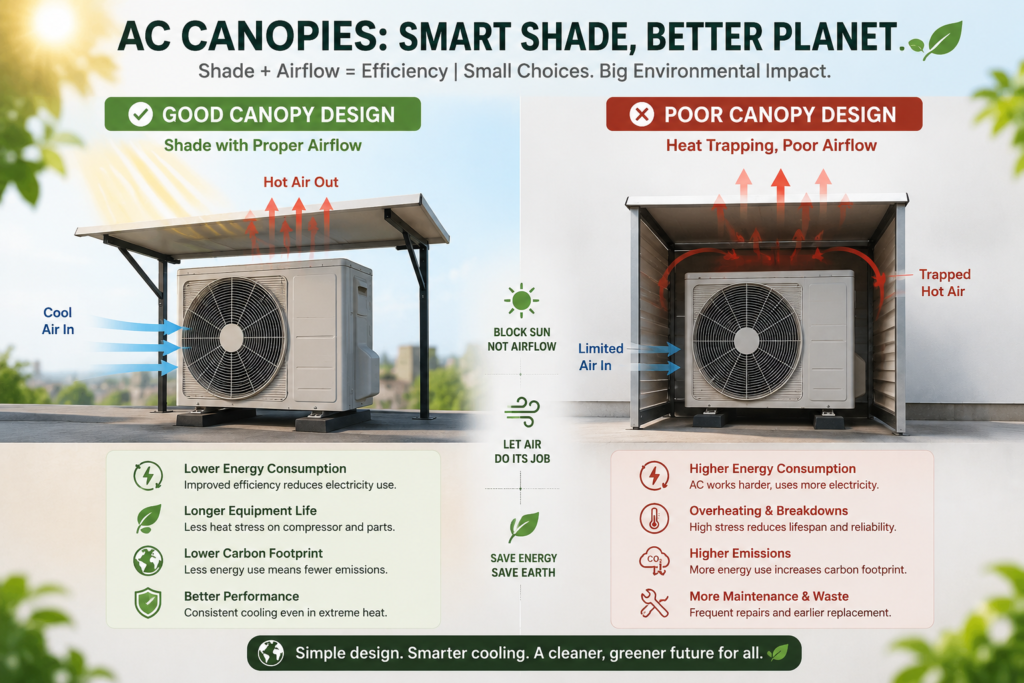
A properly designed canopy can reduce direct solar heating on the outdoor condenser.
This may help:
- Lower condenser temperatures
- Reduce compressor workload
- Improve heat rejection efficiency
- Slightly reduce electricity consumption
Even small improvements matter because cooling systems already account for a major share of global electricity demand.
According to global energy studies, air conditioning demand is expected to rise sharply as temperatures continue increasing worldwide.
This means smarter cooling practices are becoming part of the larger environmental agenda.
The Hidden Engineering Problem
Many canopy installations focus only on shade; not ventilation.
This creates a major issue.
Outdoor AC units need:
- Large volumes of moving air
- Open condenser airflow
- Free discharge of hot air
Poorly designed covers can:
- Trap hot air around the unit
- Restrict airflow
- Cause heat recirculation
- Increase compressor pressure
- Raise electricity consumption
In some cases, the AC system may actually perform worse than before the canopy was installed.
This commonly happens when:
- Covers are too close to the unit
- Side ventilation is blocked
- Decorative enclosures fully surround the condenser
- Hot discharge air cannot escape properly
The Environmental Impact
This small household practice connects directly to global sustainability challenges.
Potential Environmental Benefits
Well-designed AC shading systems may:
- Reduce cooling energy demand
- Lower electricity consumption
- Extend equipment life
- Reduce compressor failures
- Lower indirect carbon emissions from power plants
As global temperatures rise, improving cooling efficiency becomes increasingly important for:
- Reducing grid stress
- Lowering fossil fuel use
- Supporting sustainable urban living
When “Energy Saving” Becomes Wasteful
Improper canopy designs can create the opposite effect.
Bad airflow management may lead to:
- Higher power consumption
- Overheating compressors
- Reduced cooling performance
- Increased refrigerant stress
- Shorter equipment lifespan
This contributes to:
- More electronic waste
- More refrigerant leakage
- Higher maintenance waste
- Greater environmental burden
In sustainability, small engineering mistakes repeated millions of times can create large-scale impacts.
What Makes a Smart AC Canopy?
An effective canopy should:
- Block direct overhead sunlight
- Keep side airflow open
- Maintain adequate clearance around the unit
- Allow hot air to escape freely
- Use reflective or heat-resistant materials
The best designs support both:
- Shade protection
- Natural airflow circulation
The goal is not to “cover” the AC unit; but to protect it without interfering with thermodynamics.
Cooling and the Future of Sustainable Cities
As cities become hotter and more energy-intensive, cooling systems are becoming a central environmental issue.
Future sustainable cooling strategies may include:
- Smart shading systems
- Reflective urban materials
- Passive cooling architecture
- Energy-efficient HVAC systems
- Green roofs and urban vegetation
Even simple improvements to existing AC systems can contribute to:
- Lower emissions
- Reduced electricity demand
- More climate-resilient buildings
Final Thought
The old practice of shading outdoor AC units contains practical wisdom — but only when combined with proper engineering.
A well-designed canopy can support cooling efficiency and reduce environmental impact. A poorly designed one can increase energy waste and equipment stress.
In a warming world, sustainable cooling is no longer just about comfort.
It is becoming an essential part of the global environmental agenda.




Thanks for posting