
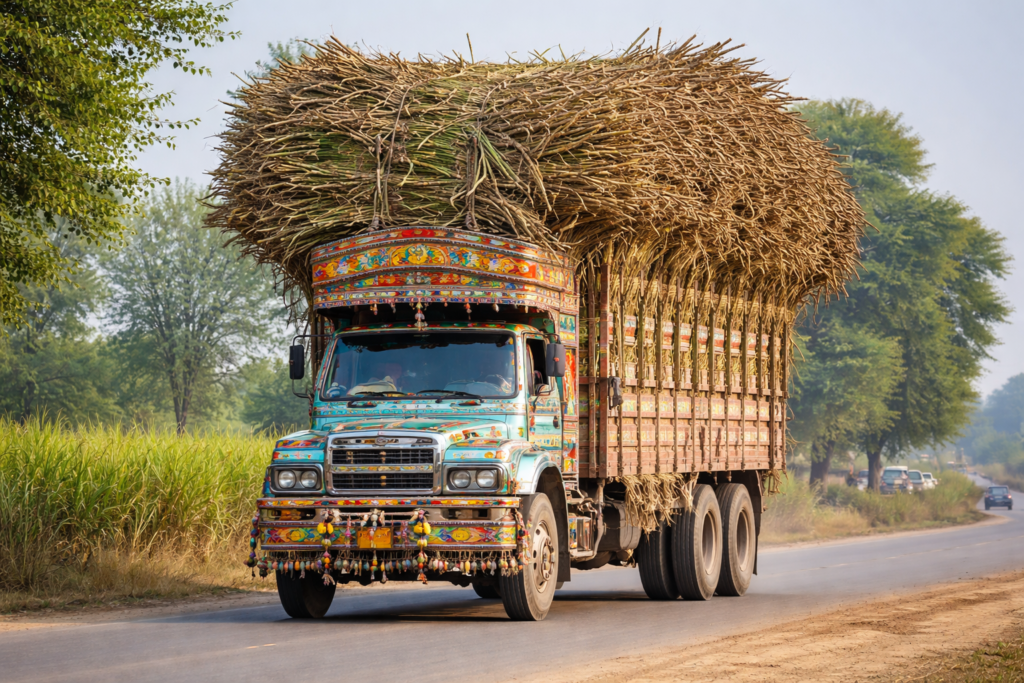

From Exports to Local Energy Solutions
Pakistan produces ~400,000–450,000 tonnes of ethanol annually, mostly from sugarcane molasses. Yet, nearly all of it is exported while the country spends over $15–16 billion yearly on energy and petroleum imports.
This is not just a policy gap. It’s a missed economic and environmental opportunity.
Why Ethanol Matters Now
With rising fuel prices and energy shortages in rural areas, ethanol offers a ready, local, and scalable solution:
- Clean-burning, renewable fuel
- Reduces dependence on imported oil
- Supports farmers and the sugar industry
- Cuts emissions from transport and small engines
Countries like Brazil (E27–E30), India (E20), and the USA (E10) have already proven that ethanol blending works at scale.
👉 Pakistan is still at 0% blending.
Opportunity 1: Farm Energy Ecosystem
Instead of waiting for national fuel blending policies, Pakistan can start where impact is immediate: rural energy use.
Practical Model:
- Ethanol-powered generators, tube wells, and small engines
- Distributed through agri stores and local dealers
- Sold with fuel cans (recurring revenue model)
Why This Works:
- Lower upfront cost vs solar for many farmers
- Reliable power for irrigation and rural businesses
- Minimal behavioral change required
- Creates a closed-loop rural energy economy
This is not experimental it’s deployable with existing infrastructure.
Opportunity # 2: Ethanol Blending (E10–E20)
Pakistan already has the raw material and production capacity and just need policy and Govt backing.
Impact Potential:
- Every 10% blend → significant reduction in oil imports
- Cleaner emissions (CO, PM, GHGs)
- Improved air quality in cities like Lahore and Karachi
📊 India’s program:
- Saved $17+ billion in foreign exchange
- Reduced 73 million tonnes of CO₂ emissions
What Pakistan Needs:
- A time-bound blending roadmap (E10 → E20)
- Pricing mechanism for local ethanol use
- Collaboration with refineries and OMCs
Right now, policy exists but execution is missing.
Opportunity 3: Ethanol-Based Octane Boosters
A highly practical market-driven solution no major infrastructure needed.
Concept:
Locally produced ethanol-based fuel additives to enhance octane performance.
Market Gap:
- Imported boosters: PKR 2,500–4,500
- Potential local product: PKR 600–900
Technical Requirements:
- Anhydrous ethanol (99.5%+)
- Corrosion inhibitors
- Engine compatibility validation
Go-to-Market:
- Petrol pumps (point-of-sale)
- Auto shops & e-commerce (Daraz, PakWheels)
- Target: users of modern EFI & turbo vehicles
This creates immediate value addition instead of exporting raw ethanol.
Environmental & Economic Benefits
Ethanol adoption aligns strongly with sustainability goals:
- Lower greenhouse gas emissions
- Reduced urban air pollution
- Circular use of agricultural byproducts
- Strengthened rural economy
It directly supports clean energy transition without heavy capital investment.
Key Industry Players in Pakistan
- JDW Group
- Fatima Group
- Almoiz Industries
- Hunza Sugar Mills
- Shakarganj Limited
- Army Welfare Trust
- Habib Sugar Mills
- Tandlianwala Sugar Mills
- Kohinoor Sugar Mills
- Noon Sugar Mills
- RYK Mills Limited
- Thal Industries Corporation
- Mirpurkhas Sugar Mills
- Dewan Sugar Mills
- PSMA – key policy stakeholder
Real Challenge: Policy vs Execution
Pakistan does not lack:
- Feedstock
- Production capacity
- Industrial base
It lacks:
- Clear policy direction
- Industry alignment
- Market activation
Every year of delay means:
- Billions in oil imports
- Lost rural income
- Missed environmental gains
The Way Forward (Practical Roadmap)
- Pilot ethanol-powered farm equipment clusters
- Launch retail ethanol additive products
- Start with E5 voluntary blending → move to E10 mandate
- Incentivize local ethanol consumption over exports
- Build public-private partnerships with sugar mills
Final Thought
Pakistan is already producing the solution.
The real question is:
Will we continue exporting it or start using it to power our own economy?
Ethanol plays a meaningful role in advancing the environment agenda by offering a cleaner-burning alternative to conventional fossil fuels. It is derived from renewable agricultural resources, helping reduce overall carbon emissions and dependence on imported fuels. By utilizing by-products like molasses, it also promotes a circular economy within the sugar industry. In addition, local ethanol use can lower transportation emissions associated with fuel imports. Overall, it aligns economic value creation with environmental responsibility.
References & Further Reading
- Pakistan ethanol export data – Trade Development Authority of Pakistan
- India Ethanol Blending Program – Ministry of Petroleum & Natural Gas
- Global biofuel trends – International Energy Agency (IEA)



OK
OK
Thankyou
Green Technology
great
Interesting topic
Thanks