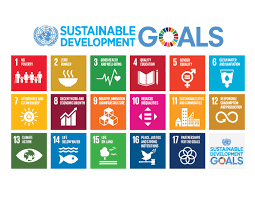

The United Nations Sustainable Development Goals (UN SDGs) are 17 global goals adopted in 2015 under the 2030 Agenda for Sustainable Development.
They aim to end poverty, protect the environment, and ensure economic growth and social well-being for all. These goals guide governments, businesses, and communities worldwide toward a more sustainable, inclusive, and resilient future.
🔗 Read more Official UN SDGs: https://sdgs.un.org/goals
Why SDGs Matter for Pakistan
Pakistan faces challenges such as:
- Climate change and water stress
- Energy shortages
- Poverty and unemployment
- Waste management and pollution
The SDGs provide a clear roadmap for addressing these issues while Pakistani corporates now play a critical role by aligning their business strategies, investments, and CSR programs with SDGs.
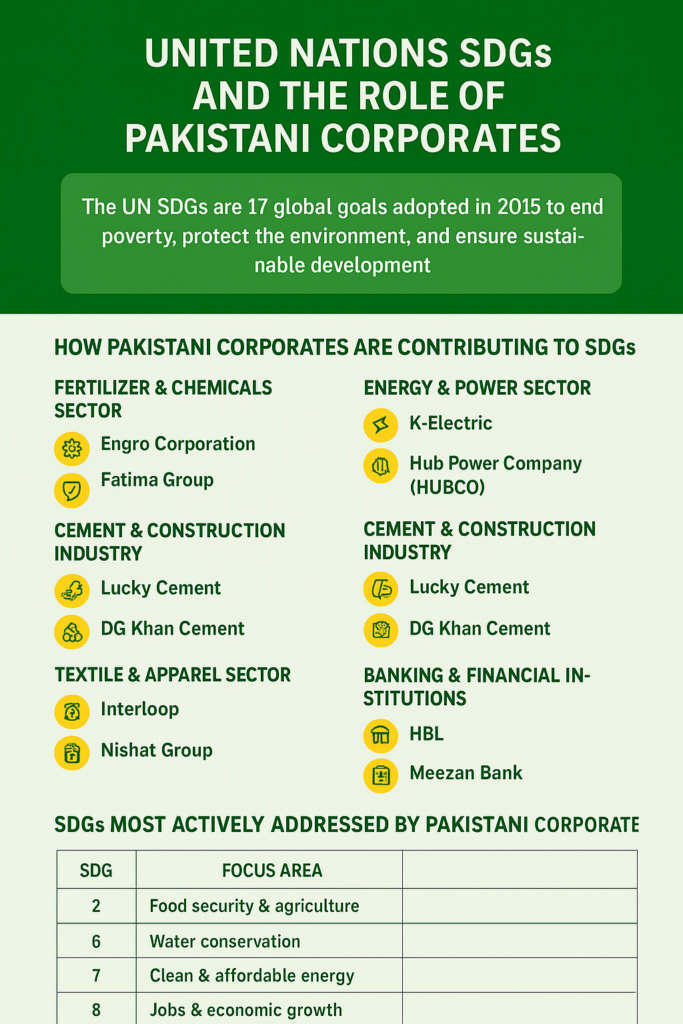
How Pakistani Corporates Are Contributing to SDGs
1. Fertilizer & Chemicals Sector
Engro Corporation
- Supports SDG 2 (Zero Hunger) through fertilizer production and farmer outreach
- Renewable energy investments support SDG 7 (Clean Energy)
- Water conservation and waste reduction align with SDG 6 & 12
Fatima Group (Fatima Fertilizer, Fatima Agri)
- Farmer education and soil health programs (SDG 2)
- Waste recycling (SDG 12 – Circular Economy)
- Energy efficiency and emissions control (SDG 13 – Climate Action)
Fauji Fertilizer Company (FFC)
- Large-scale CSR in education and healthcare (SDG 3 & 4)
- Environmental compliance, tree plantation, and water efficiency (SDG 6 & 15)
2. Energy & Power Sector
K-Electric
- Cleaner power generation and transmission upgrades (SDG 7)
- Community development and safety programs (SDG 11)
Hub Power Company (HUBCO)
- Investments in renewable and hydropower projects
- Reducing dependence on fossil fuels (SDG 13)
3. Cement & Construction Industry
Lucky Cement
- Waste heat recovery and alternative fuels (SDG 12 & 13)
- Reduced carbon footprint in cement manufacturing
🔗 https://www.lucky-cement.com
DG Khan Cement
- Use of industrial waste and energy-efficient kilns
- Focus on sustainable construction practices
4. Textile & Apparel Sector
Interloop
- Water recycling and energy-efficient manufacturing (SDG 6 & 12)
- Women empowerment and worker welfare (SDG 5 & 8)
🔗 https://www.interloop-pk.com
Nishat Group
- Cleaner production and labor standards
- Education and health initiatives in textile communities
5. Banking & Financial Institutions
HBL
- Green financing and SME support (SDG 8)
- Digital banking for financial inclusion (SDG 9 & 10)
Meezan Bank
- Ethical and sustainable Islamic finance
- Support for social enterprises and SMEs
6. Food, FMCG & Packaging
Nestlé Pakistan
- Water stewardship and plastic neutrality (SDG 6 & 12)
- Farmer development programs (SDG 2)
Unilever Pakistan
- Plastic waste reduction and recycling initiatives
- Climate action and sustainable sourcing
SDGs Most Actively Addressed by Pakistani Corporates
| SDG | Focus Area |
|---|---|
| SDG 2 | Food security & agriculture |
| SDG 6 | Water conservation |
| SDG 7 | Clean & affordable energy |
| SDG 8 | Jobs & economic growth |
| SDG 12 | Waste reduction & circular economy |
| SDG 13 | Climate action |
Why Corporate Alignment with SDGs Is Important
- Improves global credibility of Pakistani companies
- Attracts foreign investment and ESG funding
- Reduces environmental and social risks
- Creates long-term business sustainability
The Road Ahead
While progress is visible, more collaboration is needed between:
- Government
- Corporates
- Academia
- Innovation platforms
By integrating SDGs into core business strategy not just CSR only, Pakistani companies can become regional leaders in sustainability and green growth.
The UN SDGs are not just global targets indeed they are business opportunities. Pakistani corporates that embrace sustainability today will be the most competitive, trusted, and resilient organizations of tomorrow.
Follow us on LinkedIn
Send email to Editor : ask@environmentagenda.com